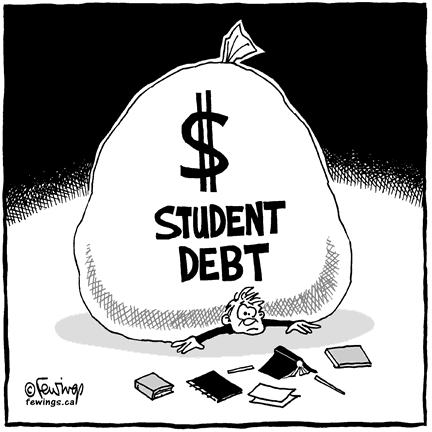
Showing posts with label paying for college. Show all posts

Tuesday, February 14, 2017

Make Money on Valentines Day!

In honor of Valentine's day, I thought I would share 13 great ways to make money on Valentine's day. The original post is from WiseBread.com and can be found here. Enjoy!

"

13 Ways to Make Money From Valentine's Day

While Valentine's Day is traditionally for lovers, it's also for savvy entrepreneurs. Instead of emptying your wallet to buy your special someone something special (aka "expensive"), you can actually turn a profit by setting up a side gig. Take advantage of the Hallmark holiday by raking in cold, hard cash with these 13 ways to earn extra money from Valentine's Day.

1. Create Handmade Valentine's Cards

If you're crafty or have decent graphic design skills, create your own line of heartfelt or funny Valentine's greeting cards. They're relatively easy to make — keeping them clever will probably be the hardest part — and you can sell them on Etsy, Bonanza, and a host of other sites that cater to handmade items. You'll can find colored envelopes at your local office-supply or craft store, and be sure to account for the cost of materials and shipping when pricing so you can make a decent profit.

2. Deliver Stuff

Not all local companies have the resources to offer delivery services, and that's where you come in. Identify some of the businesses that are particularly relevant around Valentine's Day and contact them to see what their delivery needs are. Places like florists, gift shops, and bakeries may be able to use an extra hand.
Bear in mind that this gig will likely be under-the-table because of insurance restrictions, so consider that before deciding if this is right for you. Even better, you may be able to score private gigs from, say, a guy who wants to send his girlfriend flowers last minute so he can save on the high shipping and delivery costs. One man's procrastination is your extra cash.

3. Play Chef for a Couple's Romantic Dinner

Are you a whiz in the kitchen? Offer to cook a multi-course meal for family, friends, co-workers, or even strangers who want to enjoy a relaxing Valentine's Day at home without all the hassle of cooking a romantic dinner. Plan a special menu of the couple's favorite dishes — complete with candles, ambient lighting, and mood-setting music — and set your fee to accommodate for the ingredients, travel, and time spent setting up, cooking, and cleaning after the meal.

4. Write Love Letters for Would-Be Casanovas

Most people aren't very slick when it comes to writing poetry or love letters, but if you're a gifted writer who can make people swoon in just a few sentences, putting sweet nothings on paper might be your money maker. (See also: 11 Life Skills That Are Now Completely Obsolete)

5. Plan Exciting Date Experiences

Everybody has their strengths, but men aren't always the best at planning special, exciting, or romantic dates. There are some creative dudes out there, for sure, but for the most part, the male of the species needs help in this area. If you happen to excel in this department, put together a few itineraries that are too good to pass up, and then do the due diligence so you can get paid by setting up the date to ensure that it goes off without a hitch.

6. Babysit or Pet Sit

All those parents you know — both of human and fur babies — deserve a break, too. And you can cash in big if you have the skills, certifications, and patience to babysit or pet sit while Mom and Dad enjoy a night out on the town.
According to UrbanSitter's 2015 Babysitting and Nanny Rates Survey, you're looking at about $15 per hour for one child and upwards of $20 per hour for three children. Add in a 15%-20% tip plus pizza money and you could take home a legit payday, albeit with a few more gray hairs. For pet sitting, you can expect between $10 and $15 per hour, as estimated by Care.com's pet care rate calculator.

7. Bake Valentine-Themed Goodies

What's Valentine's Day without dessert? That's the best part! Whip up your famous cookies, cakes, and pastries, and shop them around to local eateries (you'll fare better if you establish yourself as a small business with well-packaged goods and a business card; both of which are easy to do), or offer them up to your private network of friends, family, and co-workers.

8. Unload Unwanted Jewelry

If you have a collection of jewelry with which you're willing to part, you may be able to find interested buyers in your area. Instant-list apps like Wallapop, VarageSale, and OfferUp have made it simpler than ever to unload your items by snapping a photo, writing a short description, and naming a price.

9. Promote Your Party-Planning Skills

There may not be a huge market for amateur party planners, but it's worth a shot. If you're known for throwing memorable shindigs, you might be able to drum up some business. Shop the dollar stores for decorations to keep costs down.

10. Busk, or Serenade Couples

Throw a hat or instrument case on the ground in a well-traveled area and belt out love songs all day. If you want to be more proactive about it, take your show on the road and wander up to lovey-dovey couples for a serenading session. That dude would be a dummy if he didn't at least reach in his pocket for a dollar.

11. Photograph Couples' Special Moments

Valentine's Day, with all the sentiment that surrounds it, is prime time for weddings, engagements, and other relationship-specific photo ops. If you're handy with a camera, offer to snap shots of the special moments that the happy couple will cherish forever.

12. Draw or Paint Couples' Portraits

You don't have to be a well-established or recognized artist to sell your work. Some couples may enjoy the prospect of being drawn or painted, not only as a Valentine's Day activity, but also a gift to themselves that they can hang in the home as a reminder of their love.

13. Host a Singles Party for All Your Lonely Friends

Planning on spending Valentine's Day alone? Not anymore. Host a party at home for singles, if you have a large and diverse network of friends. Charge a few bucks admission to cover the cost of food, décor, drinks, and so you can walk away with a reasonable wage.

Monday, February 13, 2017

Now Offering Free Trials!

It's not about how much you make, but how much you keep! A dollar saved is a dollar earned. I have start posting links to free trials for all my readers to take advantage of! Various Amazon Services (Kindle, Music, etc.) and viewing services (HBO, Showtime, etc.) are available to you for free on the right hand side of my website. Enjoy!

Also - I have removed ads from my site to improve reader experience :)

Friday, July 18, 2014

Cash for Sperm, Easy Money for Men

Check out Bruce Watson's Article from DailyFinance.com, about how to sell your sperm for cash!

Selling Sperm for Money
"When I was in college, I once visited a friend at another university. As with many such visits, I spent much of my time in an alcoholic haze, wandering from apartment to apartment, meeting my friend's friends, drinking odd beverages, and generally getting down Hunter S. Thompson-style. Good times.

In one apartment, I remember watching some90210 on the occupants' big screen TV. Over the course of the show, I noticed that they kept referring to it as "the TV that sperm bought." Finally, unable to contain my curiosity, I asked about the nickname. Laughing, one of them told me that the roommates had pooled their resources from selling sperm and had used the proceeds to purchase a TV. Since then, my research has shown me that, regardless of the the truth of the roommates' claims, it certainly could be true. Advertised sperm donation rates vary from $1 to $200 per week; most donors can expect somewhere around $40 per donation. Given that you can only deposit sperm every five days, your career as a sperm donor will probably only net you enough money to eat at McDonald's. Although, if you save carefully, your genetic material could translate into a sweet home theater system.

When I was a college student, sperm donation seemed like an interesting idea. After all, I'd be paid for doing something that I usually did pro bono, would be able to make some poor ladies really happy, and would pick up a little bit of dough on the side. In the meantime, I was legally protected; there was no way that the little Brucies and Brucinias that were wandering the earth could track their way back to me. Then I read the small print.
To begin with, sperm donation isn't a quick and easy, drop in, drop off, pick-up-your-cash type of deal. Among other minor irritations, it requires months of tests, a six-month to three-year commitment to a sperm bank, and no "liberation" of sperm when you're off the clock. Added to this is the fact that you will probably never know what happened to your children, although recent events are conspiring to strip away the cloak of anonymity under which many sperm donors have made their contributions to society. In other words, regardless of your position on the whole anonymity thing, sperm donation could end up being a little awkward.

That having been said, there is a desire for healthy sperm donors and the money is nothing to sneeze at, particularly if you're currently working your way through your ramen and tuna fish years. Unlike egg donation or surrogacy, the comparable options that are available to women, sperm donation is relatively non-invasive, albeit a lot less lucrative. Frankly, if I had it all to do over again...well, there were a couple of years in the mid-1990's when I could have used a little more cash..."

Thanks for reading, comments encouraged.

Wednesday, December 19, 2012

50 Tips for College Students


50 Tips for College Students

Learn how to have a happy and successful college career.
1) The Freshman Fifteen does exist. So does the Freshman Twenty. Watch how many starches and processed foods you are eating.

2) Pizza - the ubiquitous college snack. See #1.

3) If it's either take out a loan or quit school, take out a loan.

4) If you can live harmoniously with someone in a 20×20 ft. space, you can do anything.

5) Flip-flops: Wear them in the dorm shower. Always.

6) Always attend the *real* class, and use the Internet one for review.

7) If you are not a morning person, don't schedule classes for 7am. You will not go.

8) Get involved on campus. All work and no *productive* socializing is boring.

9) Too much socializing = bad grades. Everything in moderation.

10) If you are feeling overwhelmed, are having problems sleeping, or have gone through a breakup,
visit your college's counseling center. If you are feeling suicidal at any point, call your college's crisis
center number or call 911 immediately.

11) There are a lot of free activities on campus. Take advantage of them.

12) Many colleges have free tutoring centers on campus. Take advantage of them.

13) Sit near the front of class.

14) Attend the whole class. Even if you feel like you will just die if you sit there any longer. Even if you
feel your brain start to ooze out the side of your ear. Because we (professors) sometimes give really important info at the end of class.

15) Recopy your notes after class. Or if you've typed them (which is recommended), do a quick read-through after class.

16) Remember that although you are 18, your college may have the right to contact your parents if you are caught drinking underage.

17) Don't do anything stupid (read: illegal). It will go down on your permanent record. Seriously. At every college you apply to after this one.

18) Register for classes as early as possible. Early bird catches the worm and all that.

19) See how your first semester goes before you consider getting a job. See how heavy your course load is first.

20) Find a bank that also has branches in your hometown. Get your account connected to your parents' account so they can transfer money to you.

21) Use direct deposit and automatic withdrawal for paychecks/loanchecks/ check checks. Less chance of you losing it.

22) Use virus protection and firewalls on your laptop.

23) The student bookstore (online and in real life) can have great student discounts on hardware/software.

24) Reconsider bringing a car to campus your first semester. It can be a pain to park.

25) Pack the clothes you need for college, and then take half of that amount.

26) The more underwear you have, the less you have to do laundry.

27) If you are doing laundry on campus or at a laundromat, stay with your clothes. Otherwise they may walk off while you are gone.

28) I can't emphasize this enough: INTRODUCE YOURSELF TO YOUR PROFESSORS AND GO TO THEIR OFFICE HOURS. This is so important, I'll tell it to you again: INTRODUCE YOURSELF TO YOUR PROFESSORS AND GO TO THEIR OFFICE HOURS. We're nice people. Seriously. And we really like it when someone is interested in our classes.

29) Use the college's career resource center - not just when you are going to graduate, but when you are figuring out what you want to do with your life. It's a free service. Use the free services.

30) For the love of God, please, please do not leave candles burning in your dorm room or apartment. Or those incense burning thingies. Bad things happen when those are left on.

31) If you have a tendency to be messy, your roommate may be compulsively neat. The general rule is that the messier you are, the more neat your roommate will be. Try to pull it together. Especially regarding food. Always throw out leftover food. That's just gross, messy or not. Learning how to adapt to someone else's living style is a wonderful learning experience. Really. And if you complained about having to share a room with your siblings while you were growing up, when you get to college you learn that you are actually ahead of the curve. :)

32) Stay on campus on weekends. If you go home every weekend because you are homesick or have a girlfriend/boyfriend back home, you will be missing out on a lot of the college experience.

33) Get your flu shots. Yearly.

34) Use condoms. Every time.

35) Long-distance relationships are a challenge to keep up when you are away at school.

36) If you get that "ick" feeling that you shouldn't be doing something or shouldn't be somewhere, stop doing it and get out of there.

37) You may feel like your parents are hovering too much. Look at it this way: they've been taking care of you since you were a baby. That doesn't just stop. Cut them some slack. The more independent and wisedecisions you make on your own, the more they will have confidence in your abilities as an adult.

38) Just because you and your roommate were friends back home doesn't mean you will be compatible roommates. You find out new things about people when you are sharing a small space. But you can work it out. Even if you and your roommate are total strangers and are completely different - you may become great friends.

39) If your roommate is doing something that bothers you, ask yourself the following three questions: 1) Am I being reasonable in being bothered by this? 2) What's the best way to talk to my roommate about this? 3) What are some solutions to this issue? If all else fails and the issue is very important to you and you've talked to your roommate to no avail, talk to your Resident Assistant.

40) Practice safety. Don't walk home alone in the dark. Walk with someone. Many campuses have services where you can call and someone will walk back to your dorm with you.

41) Just because you *can* do something doesn't mean you should.

42) Use flashcards to quiz yourself when studying. And get someone else to quiz you with them. If you always quiz yourself with your own flashcards, you may skip over some that you don't know the answer to.

43) You may not know what you want to do for a major. It's okay. There are people much older than you that still aren't sure what they want to do with their lives. That's okay. See your academic adviser for help. Pay attention to which classes you really look forward to - that can be a clue as to what you might want to major in.

44) If you have a dining card/pass - do not treat all your friends to lunch and dinner. That is real money. Real money that you will be asking your parents for when it runs out.

45) Study groups can be helpful - but keep it to between 3 and 5 members (including you). More than that, and it turns into a social event.

46) If you have ADHD or a learning disability, apply for accommodations as soon as possible - even right after you find out you've been accepted to school.

47) Sleep. Get it. Get enough. You may be laughing at this, being a college student and all...but you need to get enough sleep.

48) Wash your hands. Often. Living in the dorms is a communal living experience. Germs love communal living.

49) Keep in touch with your friends from back home, but be open to meeting people of all different cultures and interests.

50) Enjoy your college experience - it's one most rewarding experiences of your life, academically and socially.

Dr. Sarkis is the author of Making the Grade with ADD: A Student's Guide to Succeeding in College with Attention Deficit Disorder.

Original Post: http://www.psychologytoday.com/blog/here-there-and-everywhere/201008/50-tips-college-students
Feel free to add your college tips!
www.stephaniesarkis.com

Tuesday, December 18, 2012

How to Make Money Over Winter Break


If you’re anything like me, you wait all semester to catch a break. But after a few days at home, you somehow find yourself bored out of your mind. You have no projects to think about, no tests to study for, and more time on your hands than you thought you could handle. So what better time to fill your days with a job and make some extra cash? Here are 15 ways to get going on filling up your bank account before spring semester rolls around:

shoveling snow pathway cold weather winter wintertime 1. Shovel some snow- If there’s lots of snow where you live, you might as well make the most of it and offer your shoveling services to your neighbors and family members. Tom Vecchione, executive director of career services at Elon University, calls this money-maker an “oldie but goodie.” He also says he would definitely pay someone to do it for him!
2. Be a distributor- Vecchione says, “Many employers in larger to mid-size areas employ high school and college students to hand out flyers or other marketing items to the public.”  Look around at local coffee shops or ice cream shops to see what flyers are already posted, and then give them a call to see if they’d like any more help.
finger painting hand painting kindergarten children activity fun3. Babysit- Parents are super busy with holiday parties and office parties over break. Offer to watch your cousins, neighbors, siblings or nieces and nephews. You’ll have fun and make good money in the process.  If your neighborhood or high school has an email list-serv, send something out letting everyone know you’re available to help.
4. Watch someone’s pets- Lots of people take short vacations and trips over the holidays. And most people would rather leave their pets at home than kennel them, so offer to feed and walk your neighbor’s dog or feed their fish. You’ll be a great help!  This is another item you can shoot over a neighborhood email list-serv. 
closet messy unorganized piles of clothing5. Clean out your closet- Go through all of your clothes and sell what you don’t want at a local consignment store. Just try not to buy anything there while you’re selling your stuff if the goal is to be cash flow positive!
6. Sell some stuff on the Internet- Use eBay to sell items that you no longer have any use for. It’s an easy way to make money. 
7. Hold onto that summer job- Keep in touch with your boss from this summer. Chances are, he might want to hire you back for a few weeks because he won’t have to train you! Reach out to your boss as soon as you get home and ask him right away if the company will need any help over the holidays.
8. Get into retail- Vecchione says, “Retail, or anything related to helping a company adequately is a great way to spend your break [because] the holidays increase their demand for services.” You can help! When you’re out doing Christmas shopping, spend some time going in and out of stores asking if they’re hiring for the holidays.  
yard garage sale sell old items fundraiser9. Host a garage sale- Ross Wade, Assistant Director of Career Services at Elon University, suggests having a holiday garage sale. Sell all of your old CD’s, DVD’s, handbags, clothes, whatever! Get your siblings or neighbors to organize it with you so you have more to sell and you can all benefit from it! Put up a flyer at your local Community Center or put flyers in mailboxes around your neighborhood to publicize. Post something about it on your Facebook too—you can even make a Facebook photo album that is a sort of gallery of the items you’ll be selling. 
10. Play the ‘nice’ card- Wade suggests playing the nice card. “Be extra nice to your family so they give you some extra money in your holiday card.” Worth a try, right? 
ten dollar bill in the leaves soil
11. Clean the house… in search of money- Do a quick sweep all over your house, taking extra time to look under the couch and behind the cushions. Then take the loose change you’ve gathered up and put it in the Coinstar at your local grocery store. You can convert the change into gift cards, too.  Hey—you said you had a lot of free time, right? 
bookbyte.com textbooks old re-used
12. Sell your old textbooks- Lots of people sell their books back to the bookstore, but you can get a lot more money by selling them to friends or other students who are taking the same classes. Visit websites like bookbyte.com 
upload a design artistic tribal ethnic print
13. Use your artistic ability- Wade says, “If you’re artsy, design and create some holiday cards or art to sell on etsy.com and upload a design for a greeting card. You can sell your personal designs online! 
recycle go green environmentalism
14. Recycle- Did you know that you can get money for recycling? Some grocery stores give customers change in exchange for used plastic bottles. Getting paid to go green? Doesn’t get any better than that! 
15. Wrap it up- Put flyers out in the mailboxes in your neighborhood offering your wrapping services. Say that you’ll take some stress off of their plate by offering to do their present wrapping!

Saturday, November 24, 2012

How to Conquer your Student Loans


Don't despair. You have options with private lenders and the feds to cut your payments.
[Click here to check current credit card offers, including rates and terms.] When Angela Moore looks into her future, she sees checks for $500, $147, $280 and $250 piling up like leaves in a forest. Those are the amounts she could be paying every single month on her four student loans, which total $92,000, for the next several decades. If she postpones payments, the amounts she owes will go up. If she skips them, she could ruin her credit and end up in court.
Moore, 26, graduated with a bachelor's degree from the University of Hartford in 2009 with $25,000 in federal student loans and $67,000 in private loans. She devotes about half of her paycheck to those bills and resorts to credit cards to cover other expenses. Says Moore, the first in her family to graduate from college, "It's heartbreaking to have a college degree and not be able to pay for normal things because I have to pay student loans."
Moore works at an orthopedic surgeon's office, the same job she had in college. She would like to move on someday but can't afford to make less than her current wage of about $18 an hour. Nor does she see an obvious way out of her predicament. "If you're in that much debt and have a house or car, you at least have something you can give back. I have a piece of paper. I have nothing to give back."
Meet the young and burdened. Of borrowers who graduated from four-year colleges in 2008, 10% walked away with $40,000 or more in student debt, almost three times the number of students who borrowed at that level in 2000, according to the Project on Student Debt, an advocacy group. The default rate for students who entered repayment between fiscal year 2006 and fiscal year 2007 was 6.7%, the highest since 1998.
You'd think bankruptcy would be a solution to massive student debt, but for most people, it is not an option. You must demonstrate to a judge that repayment would cause "undue hardship," a term interpreted by some courts to mean the "certainty of hopelessness," according to Deanne Loonin, of the National Consumer Law Center. This strict standard applies to both federal and private student loans. Proposed legislation in Congress would change that standard for private student loans, making them eligible for discharge under the more lenient rules that apply to credit-card and other consumer debt.
Meanwhile, federal loans offer programs that let you reduce payments or even qualify for loan forgiveness. As for private loans, some lenders are offering deals to borrowers rather than see loans go south.
Cut a Deal With a Lender
A few years ago, lenders were rushing to offer private loans to students, including those who were less than creditworthy. Now, borrowers who couldn't afford the loans in the first place are defaulting in droves, says Joshua Cohen, a Hartford-based lawyer who specializes in debt. "The industry is either going to take a bath or start coming after people."
Some lenders hope to avoid both scenarios by offering interest-only repayments or other arrangements that lower payments for a time. "It does us no good to have a customer with a loan he or she is unable to repay," says Patricia Christel, of Sallie Mae, the giant student-loan company. Check your promissory note to see whether it includes such provisions. "It's very case-by-case," says Loonin. If it does not, try to negotiate a plan with your lender.
If you don't reach an agreement, ask the lender for forbearance, in which you make no payments at all for three-month increments, usually for no more than a year (interest continues to accrue). Lenders are less willing than they once were to sign off on these deals, but they may do so if they believe the break will get you back on track. "The important message is, contact your lender sooner rather than later," says Tim Ranzetta, of Student Lending Analytics.
With federal loans, you can be past due for months before going into default. With private loans, you generally fall into that category as soon as you miss one payment. A collector will start calling, and eventually a third-party collection agency will take over the loan. (The Fair Debt Collection Practices Act protects you from abusive collection practices.
Unlike the feds, who have the authority to tap your resources, private creditors must go to court to collect debts. "Until then, there's nothing they can do," says Cohen. Defaults are subject to your state's statute of limitations, typically six years. If you do get sued and lose, the creditor can garnish your wages, put a lien on your house and wipe out your bank account.
Pick a Plan From Uncle Sam
Federal loans, which include Perkins loans, Stafford loans and Grad Plus loans, provide more options. (The Perkins loan repayment provisions differ somewhat from the other two; call your school for details.) For Staffords and Grad Plus loans, the standard plan gets you out from under after 120 equal monthly payments over ten years. If you can't afford those payments but expect to have a higher income in a few years, you can choose the graduated plan, through which you make lower payments in the first few years and higher payments later over the ten-year span. Because you pay less at the beginning, you pay more interest overall.
If you owe at least $30,000 in federal loans, consider the extended repayment plan, which lets you stretch monthly payments as far out as 25 years, for lower monthly amounts but at a higher cost. Or you can consolidate your federal loans through the federal Direct Loan program and extend your payments to 12 to 30 years, depending on the amount you owe. (For details, seewww.loanconsolidation.ed.gov.)
Borrowers whose federal debt outstrips their annual income should look into the income-based repayment plan, which is "like gold" for those who qualify, says Edie Irons, of the Project on Student Debt. This program, which improves on two other income-based programs, can reduce your payments to as low as zero.
You probably qualify if your total debt exceeds your annual income. After 25 years, any remaining debt is forgiven; you owe tax on the forgiven amount. If you enter the income-based repayment plan and then get a big bump in salary, your payments from that point on are calculated according to the standard plan.
Cops, public defenders, public-school teachers and others working full-time in the public sector qualify for cancellation of any remaining debt after 120 payments, made on or after October 1, 2007. To get this deal, your loans must be with the federal Direct Loan program, as opposed to the now-defunct program (known as FFEL) offered by private lenders. You can consolidate FFEL loans into the Direct Loan program. The forgiven amount is tax-free.
You have the right to defer federal-loan repayments for up to three years if you are unemployed, experiencing economic hardship, attending school at least half-time or serving on active duty in the military. The feds pick up the interest during the deferment on subsidized loans but not on unsubsidized loans. Call your lender for details.
If deferment isn't an option, ask your lender for forbearance. With a federal loan, you can suspend payments for up to three 12-month periods. Depending on the amount you earn and owe, you may be legally entitled to this deal. If not, ask anyway: It's in the lender's best interest to give you time to get on your feet. Interest accrues during forbearance.

Thursday, October 4, 2012

5 Ways to Fund a College Education


According to CNNMoney, the average tuition cost at the average public university rose over 8% in 2011. The following tips are designed to dissuade you from skipping college because you think you can't afford it, and to show you some strategies for making higher education expenses fit into your budget.

Choose Your School Go to an in-state public school or a public school in a surrounding state that has reciprocity for reduced tuition, which will be much lower than rates at a non-reciprocal out-of-state public school or a private school. If you are not satisfied with the quality of the state schools where you live, consider moving to a state with schools you like and establishing residency.
To establish residency, you will have to meet strict requirements that vary by state and sometimes even by school - but for the savings, it may be worth it. Most states require you to live in the state for at least one year in order to be eligible, but there are other criteria to meet as well. In California, for example, it is very difficult for students who don't have a parent living in California to establish residency before their mid-20s. In addition to living in-state for 366 days immediately prior to requesting resident status, potential students must provide objective documentation demonstrating an intent to make California their permanent state of residence, such as a driver's license, ownership of property or steady employment, as well as financial independence.
If you can wait it out and meet these criteria, then you can attend quality schools at in-state rates.
Another money-saving strategy that doesn't involve postponing college is to apply to schools that have a shortage of people like you. People like you could be people interested in your major, people from your state, people with your ethnic background, people who are as smart as or smarter than others applying to the school, people who play the unusual instrument you play or any other number of traits. Schools where you'd be a unique addition may give you scholarships.

Think About Cost of Living Keep in mind that housing and other living costs will vary by location, especially if you choose to live off campus. An apartment in New York City will be much pricier than an apartment in the Midwest. Also, the college where you obtain your undergraduate degree can sometimes influence where you will end up working and living after school. If possible, choose a location where you'd actually want to live, where the cost of living is affordable, and where your school will be a recognizable name that will allow you to get more mileage from your diploma. UCLA may be considered a good school in the West, but may not be held in the same high regard in New York.

Don't Get Just Any Job to Pay for School Make your job count by sticking to high-paying work. To find high-paying work, especially for summer jobs when you'll be free during business hours, seek out office jobs through temp agencies. Temp agencies do most of the job hunting work for you, and the office jobs they offer tend to pay above minimum wage, provide work experience closer to the situations you'll encounter post-college, and may give you connections that will help you land a meaningful internship or your first salaried position. Also, despite what the name implies, you can find both short and long-term jobs through temp agencies.
If you can't get a high-paying job, get a job that will keep your living expenses down, such as working in a restaurant where you get free food. If you work at a bakery, for example, any unsold goods at the end of the day may be fair game for employees since the business can't sell day-old bread. Another possibility is to find a campus job that offers perks. If you can get a job in your school's residential life office, you may be able to get a discount on housing during the school year or the summer.
If you're still in high school, start working now and save all your paychecks for college. You're still living at home; you probably don't have high living expenses chomping into your earnings like you will later on. Also, see if your high school has a program that will allow you to leave school at noon every day to go to work during your senior year. This will increase your job options, including opening up the possibility of the aforementioned office job, and allow you to work more hours.

Be Flexible with Your Schedule Some college programs, such as engineering, are more intense than others, making it quite difficult to work while in school. For these programs, consider attending school part-time so you can still work part-time. Even if you're not in an overly demanding program, attending school part-time can help you spread out tuition costs and free up more time to work. However, part-time students may not have the option of living on campus, which can make it more difficult to be involved in the social aspects of college.

Wait Another option is to take a year or two off after high school to work full-time so you can save up enough money to make school affordable. If you don't want to postpone college, you could take your classes during evenings and weekends in order to work full-time during the week. This strategy may take more than four years to complete, but it can be easier to budget. One argument against this approach is that many people find it easier psychologically to go straight from high school to college because study habits are still ingrained.
With education costs as high as they are and certain financial situations that fall outside the norm, even some middle-class parents may not be able to make significant contributions to a child's higher education costs despite what the formulas insist.
If you have a lot of patience, you can wait until you become an independent student as defined by the Higher Education Act, which has a different definition of "dependent" than the Internal Revenue Service (IRS). If you identify with some of the following you may qualify as an independent student.

    • 24 years or older by December 31 of the award year

    • Orphan or ward of the court

    • Armed Forces Veteran or serving actively

    • Graduate or professional student

    • Married

    • Dependents other than a spouse

    • Student for whom a financial aid administrator makes a documented determination of independence by reason of other unusual circumstances
Being an "independent student" under the Higher Education Act could make you be eligible for more financial aid because the financial aid formulas applied to this group won't take parental contributions into account.

The Bottom Line Some of these measures are purely practical and don't take into account many of the intangibles of the college experience, such as the learning experience of freshman dorm life. Before you start on your college plan, consider everything you want to get out of college so that you don't have regrets later. Although you may have to make some sacrifices that your peers don't, such as starting school later or staying in the state, you can still have the experience you want and attain a degree that will lead to a financially successful and stable future.

Original Post: http://finance.yahoo.com/news/5-ways-fund-college-education-204748990.html;_ylt=AuTzh2NnbN7krCyQ_MYkoZvz6IdG;_ylu=X3oDMTNoMWI3c3FkBG1pdANGaW5hbmNlIEluZmluaXRlIEJyb3dzZSBTcGxpdARwa2cDNDg5OTZiMjktZDNiNi0zMGJjLWFhNWItNGU5ZDE3MDdhM2QzBHBvcwNsMgRzZWMDbWVkaWFpbmZpbml0ZWJyb3dzZWxpc3R0ZW1w;_ylg=X3oDMTNqNDVub244BGludGwDdXMEbGFuZwNlbi11cwRwc3RhaWQDM2M4MmMyMjktMmI4OC0zYTRkLTgwM2QtMTQ0ZDQ2MWUwYmFjBHBzdGNhdANwZXJzb25hbGZpbmFuY2V8Y2FyZWVyLWVkdWNhdGlvbgRwdANzdG9yeXBhZ2U-;_ylv=3

Tuesday, October 2, 2012

How to Sell your iPhone


With the recent release of the iPhone 5, you might be thinking about upgrading. I know I am. But at the same time, I have a perfectly good iPhone 4S, so I’d need to figure out what to do with that first…
In the past I’ve touched on the possibility of selling your stuff to Amazon via their trade-in platform in return for a store credit. While a store credit isn’t cash, we’re talking about Amazon. At our house, an Amazon credit is darn near cash, so that doesn’t concern me.
But Amazon isn’t the only game in town. eBay and Craigslist are obvious alternatives. And another option that I’ve seen heavily advertised on TV has been Gazelle. So which offers the best deal?
For simplicity, I’m going to focus on my own phone — a 64gb iPhone 4S in black. I tend to take pretty good care of things, so I would say that my phone is in “good” condition. I’ve kept it in a case it’s entire life, there are no scratches on the screen, etc.
So how do the options stack up?
On eBay it looks like you can pick up a phone similar to mine somewhere in the mid-$300 range. While you could auction it off and hope for a higher price, there are units available in this price range using “buy-it-now” option so it’s hard to imagine doing much better.
As for Gazelle, I just checked and found that I could get $260 for my phone with minimal hassle. Not great, but not terrible, right? After all, there’s no need to mess around with creating a listing, dealing with potentially shady buyers, etc.
Well, over at Amazon I could pocket a cool $382.50 (in store credit) for my phone. Once again, there would be minimal hassle (certainly less than eBayplus no fees) and, like I said above, Amazon store credit is as close as you can get to cash in my house without actually having cash.
Note that I’ve ignored Craigslist for this comparison because that’s highly localized and it’s very hard to predict sales prices from one location to another. Also, you can really only access the asking prices so it’s impossible to say how much things are selling for via Craigslist.
Clearly, at least to me, Amazon comes out on top. And when you consider that the equivalent iPhone 5 model is selling for $399, it’s hard not to pull the trigger. Then again, you have to consider those pesky early termination or upgrade fees. The iPhone 4S has only been out for about a year and these things typically come with a 2 year contract.
For now, I’m sitting tight, mainly because of the aforementioned fees. What about you?
This article originally appeared on FiveCentNickel:Selling a Used iPhone

Thursday, September 27, 2012

Paying for college with fertility clinics, sugar daddies

Everyone is recognizing the high costs of college tuition today, and many are turning to creative ways to pay off their debt. Check out this article from CNNMoney

By Blake Ellis | CNNMoney.com – Tue, Sep 18, 2012 5:11 AM EDT

What do sugar daddies, medical studies and pawnshops have in common? They help some students afford a college education.
With the average family reporting that they are only on track to meet 30% of their college savings goals, every extra dollar counts -- and nothing is off limits.
John McKinley-Campbell had no job, $135,000 in student loan debt and he wanted to go back to school to get his Ph.D. at Florida International University. In order to afford to make it all happen he became a lab rat.
He has been participating in medical studies for pharmaceutical companies ever since his aunt saw an advertisement for one on TV. He lived in a medical facility for 14 days to test an arthritis medication and then signed up to receive injections of a breast cancer drug through an IV over the course of 8 days.
Those two studies alone will earn him about $8,500, which he plans to put toward an $1,800 GRE preparation course, the GRE test fee of $175 and the university's $100 application fee. The rest will go toward housing and tuition if he gets accepted. "If I can't find work [while in school], there's always a headache medicine I could test," he said.
Norah, who asked that her last name not be included for privacy reasons, has taken a slightly different route. She decided to become an egg donor at Shady Grove Fertility Center in Maryland this year, one of the largest fertility centers in the country.
The 24-year-old grad student earned $6,500 for her first egg donation, which almost covers her entire first year of school. A couple more egg donations will leave her with enough money to pay the full cost of the program -- around $15,000.
"When I worked a second job [between college and graduate school], it took me almost a year working in retail to make this same amount I've already made from one egg donation," she said.
Along those lines, a sperm donor at California Cryobank, who requested to remain anonymous, said he has earned $2,600 from making sperm donations for the past year, helping him cover his college living expenses and lab fees.
California Cryobank, which has several locations around the country, said nearly half of its qualified donors are college students, and sperm donors can make up to $1,200 per month -- or $14,400 a year -- if they donate three times a week.
Other cash-strapped college students are using their looks and sex appeal to find "sugar daddies" who are willing to foot their tuition bills.
One 21-year-old student said she receives a monthly allowance from a 37-year-old "sugar daddy" she met through online dating site SeekingArrangement.com, which helps rich men find young women who are looking to be supported financially. In exchange for her company, she says her sugar daddy has been making her full tuition payments of $1,500 each month.
According to SeekingArrangement, that allowance is low compared to what most college students on the site receive. About 41%, or 350,000, of the sugar babies on SeekingArrangement.com are college students, and two-thirds of them say they are using their sugar daddy as a primary or secondary means of paying for college -- receiving an average of $4,200 a month for college expenses, according to the company.
Parents are also finding creative ways to cover their kids' college costs.
After coming up $4,000 short for his son's tuition, Dave McDougall, pawned 15 pens from his $40,000 collection of luxury and vintage pens as collateral for a $4,100 pawnshop loan. The loan came with a steep 6% monthly interest rate -- amounting to a 72% annualized rate (personal loans often come with annualized interest rates in the low teens). He plans on paying it off in September when he gets his bonus check from work.
Another parent, Carol Carlisle, hosts international students who come to the United States to learn English as a Second Language at a program called Intrax in San Francisco, which pays host families about $32 a night. She's using that money to pay back the home equity loan she and her husband took out to pay for their daughter's college tuition.
Carlisle began hosting students in June and has already made about $2,700 -- $1,800 of which she put toward the loan. She expects to be able to completely pay off the loan after hosting students for a few years.
"When our daughter graduated high school in 2005, we thought we would use our home equity to pay for college and would pay it back, but then 2008 came around and my husband is a builder and everything collapsed for him," said Carlisle. "Besides being a joy [to host ESL students], we get this check every month, and we can finally make payments on that home equity."
And if you thought it couldn't get any more unconventional, Wayne Perry has started saving early for his son's education by making money off of a YouTube video that unexpectedly went viral, featuring his newborn son holding the forceps used to cut his own umbilical cord. With more than one million views, Perry said he is raking in around $1,000 a month from Google AdSense, which places ads on YouTube videos and other online content and pays the publisher based on how often the ads are clicked on or viewed.
He says he's putting that money -- $8,000 so far -- into a college fund for his son, who is now two years old. If the payments continue, he thinks he could easily have more than $100,000 saved by the time his son is 18.
"We're middle class, where we make too much to get a lot of [college] grants and low-cost loans but don't make enough to foot the bill for a really great school -- and imagine when he's 18 what the cost of tuition will be," said Perry. "I could never have saved that kind of money for him without this -- never."